Since 2009
Since 2009


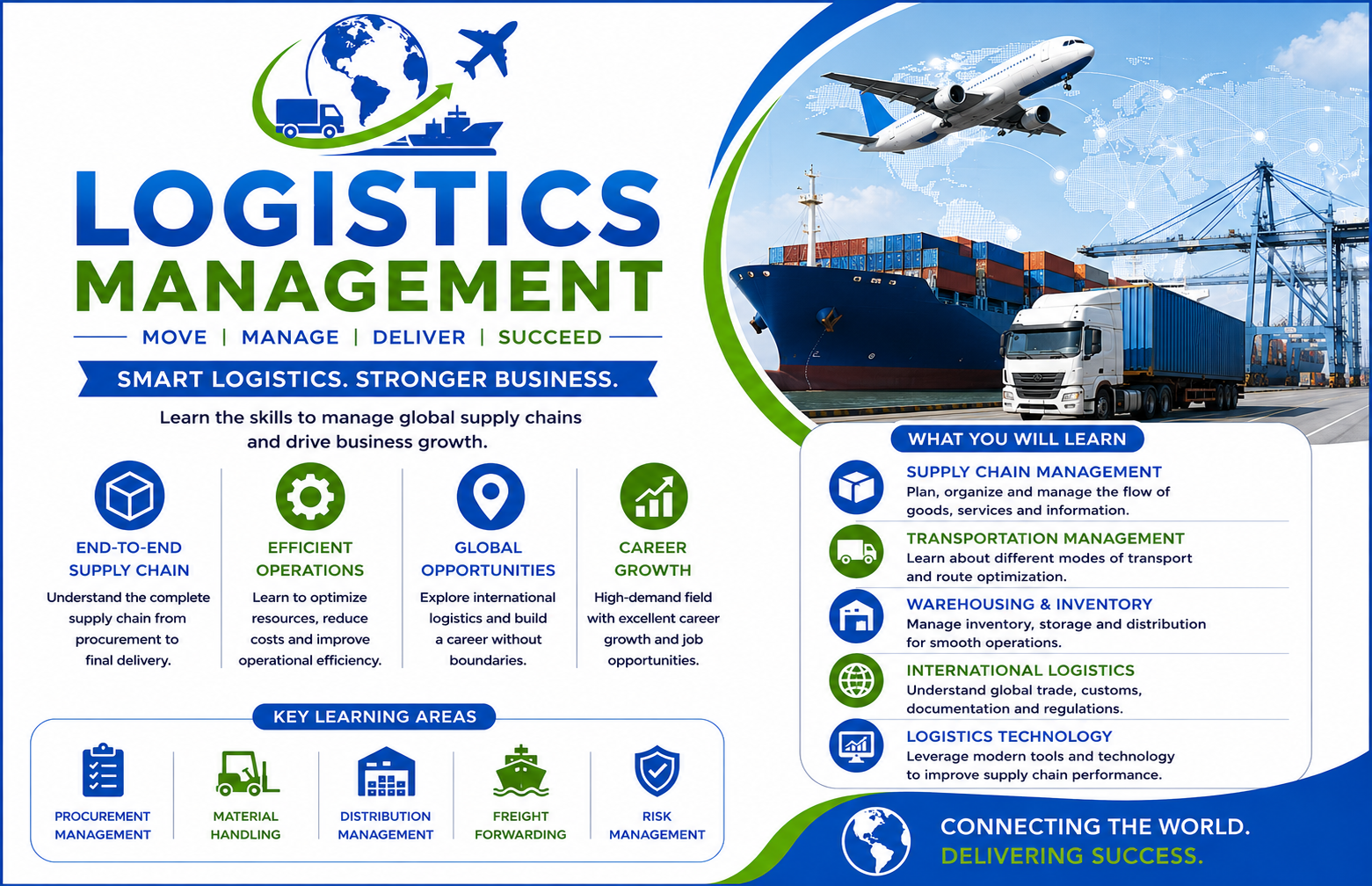
A Logistics Management course is a program of study that teaches how to plan, organize, and control the movement of goods, services, and information from the point of origin to the final customer.
It focuses on making sure the right product reaches the right place, at the right time, in the right condition, and at the lowest possible cost.
A typical course covers topics like:
Supply chain management (how products move from suppliers to customers)
Transportation management (road, rail, air, and sea shipping)
Warehousing and inventory control
Procurement and purchasing
Packaging and distribution
Demand forecasting
International trade and shipping rules
Use of logistics software and tracking systems
Planning and coordination
Problem-solving and decision-making
Cost and time optimization
Communication and teamwork
Analytical thinking
Logistics is used in almost every industry, including:
E-commerce (Amazon-style delivery systems)
Manufacturing companies
Shipping and freight companies
Retail businesses
Airlines and transport companies
After studying logistics management, you can work as:
Logistics manager
Supply chain analyst
Warehouse manager
Procurement officer
Transportation coordinator
Eligibility for a Logistics Management course depends on the level of study (certificate, diploma, degree, or postgraduate).
You can join:
Certificate courses / short-term diploma in logistics or supply chain basics
Eligibility:
Pass in 10th standard from a recognized board
You can apply for:
Diploma in Logistics Management
BBA in Logistics / Supply Chain Management
B.Sc / BA in Logistics or related fields
Eligibility:
Pass in 12th standard (any stream: Arts, Commerce, Science)
Some colleges may prefer Commerce/Maths, but it’s not always required
You can study:
MBA in Logistics & Supply Chain Management
PG Diploma in Logistics
Eligibility:
A Bachelor’s degree in any field
Some institutes require entrance exams or work experience (optional)








Your Future is Created by what you do Today not Tomorrow
UDYAM REGISTRATION NUMBER : UDYAM-TN-03-0125460
© Bright Life All Rights Reserved
