
Since 2009
Since 2009

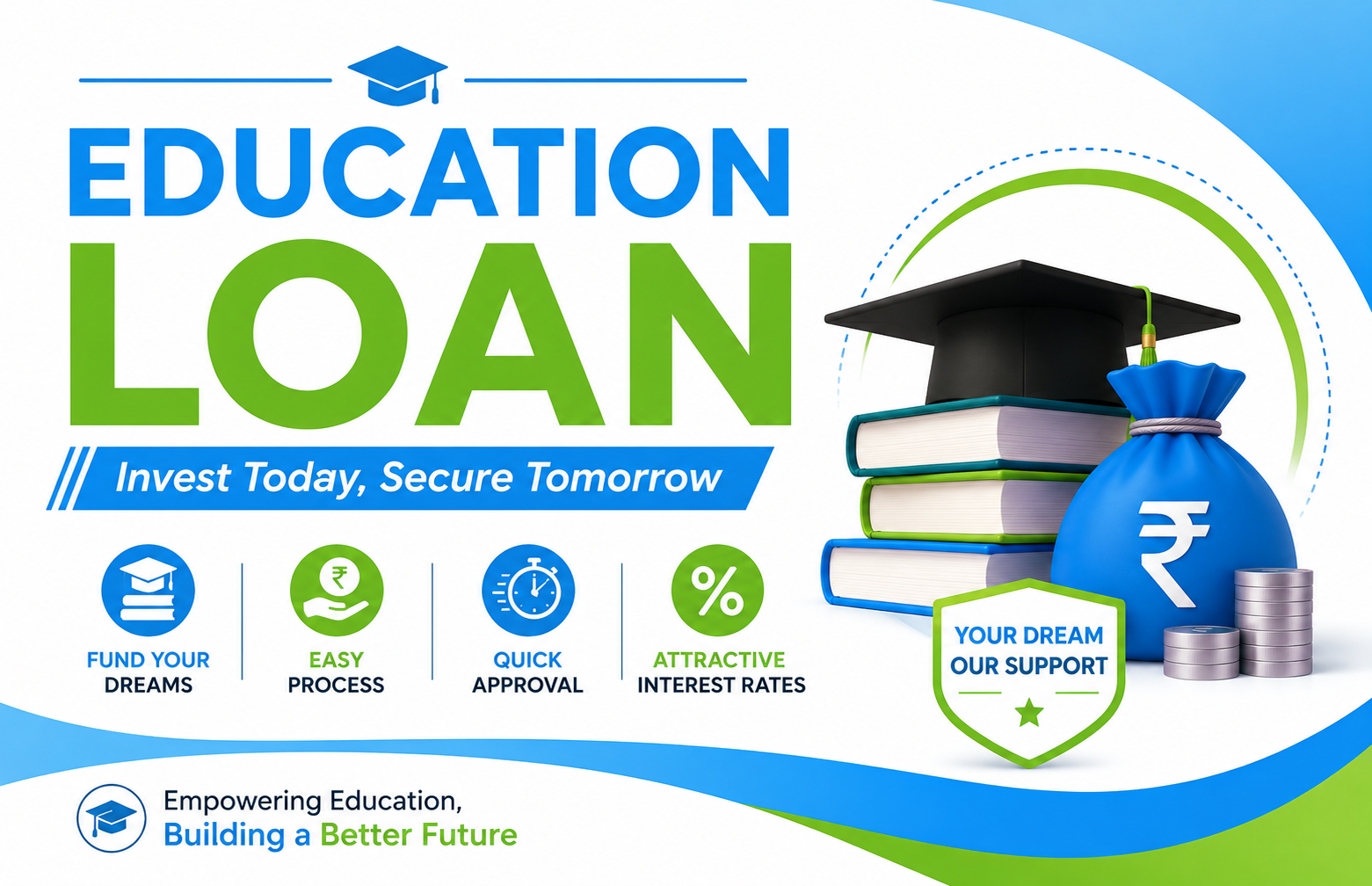
An education loan is a financial product specifically designed to help students pay for higher education and related expenses when they or their families cannot pay the full cost upfront.
Depending on the lender and course, it may cover:
Tuition fees
Admission and examination fees
Hostel or accommodation charges
Books, laptops, instruments, and study materials
Travel expenses for overseas education
Insurance premiums (if required by the lender)
Other educational expenses approved by the institution
For bachelor's degree programs such as engineering, medicine, arts, science, commerce, etc.
For master's degrees, MBA, M.Tech, MS, and similar programs.
For students pursuing education in other countries.
For professional certification courses, technical training, and vocational programs.
The actual amount borrowed.
The fee charged by the lender for providing the loan.
A period during which repayment is not required. In many cases, this includes:
The duration of the course
Plus an additional period after graduation (often 6–12 months)
The fixed monthly payment used to repay the loan.
A parent, guardian, spouse, or other eligible person who shares responsibility for repayment.
An asset pledged as security for larger loans, such as property or fixed deposits.
Suppose:
Course fee: ₹8,00,000
Education loan: ₹8,00,000
Course duration: 4 years
Moratorium: 1 year after graduation
The bank pays the approved amount. You study for 4 years and may not need to make full repayments during that time. After the moratorium ends, you begin paying EMIs according to the repayment schedule.
Allows access to higher education without immediate funds.
Repayment starts later, giving time to find employment.
Interest rates are often lower than personal loans.
Interest paid may qualify for tax benefits in some countries.
Interest increases the total amount repaid.
Missing payments can affect credit history.
The co-borrower may also be responsible if repayments are not made.
Large loans can take many years to repay.
Many Indian banks, including State Bank of India, Bank of Baroda, Punjab National Bank, and Canara Bank, offer education loans for studies in India and abroad.
Typical requirements include:
Admission to a recognized institution
Academic records
Identity and address proof
Income proof of parent/guardian
Collateral for larger loan amounts (depending on lender policies)

Your Future is Created by what you do Today not Tomorrow
UDYAM REGISTRATION NUMBER : UDYAM-TN-03-0125460
© Bright Life All Rights Reserved
