Since 2009
Since 2009


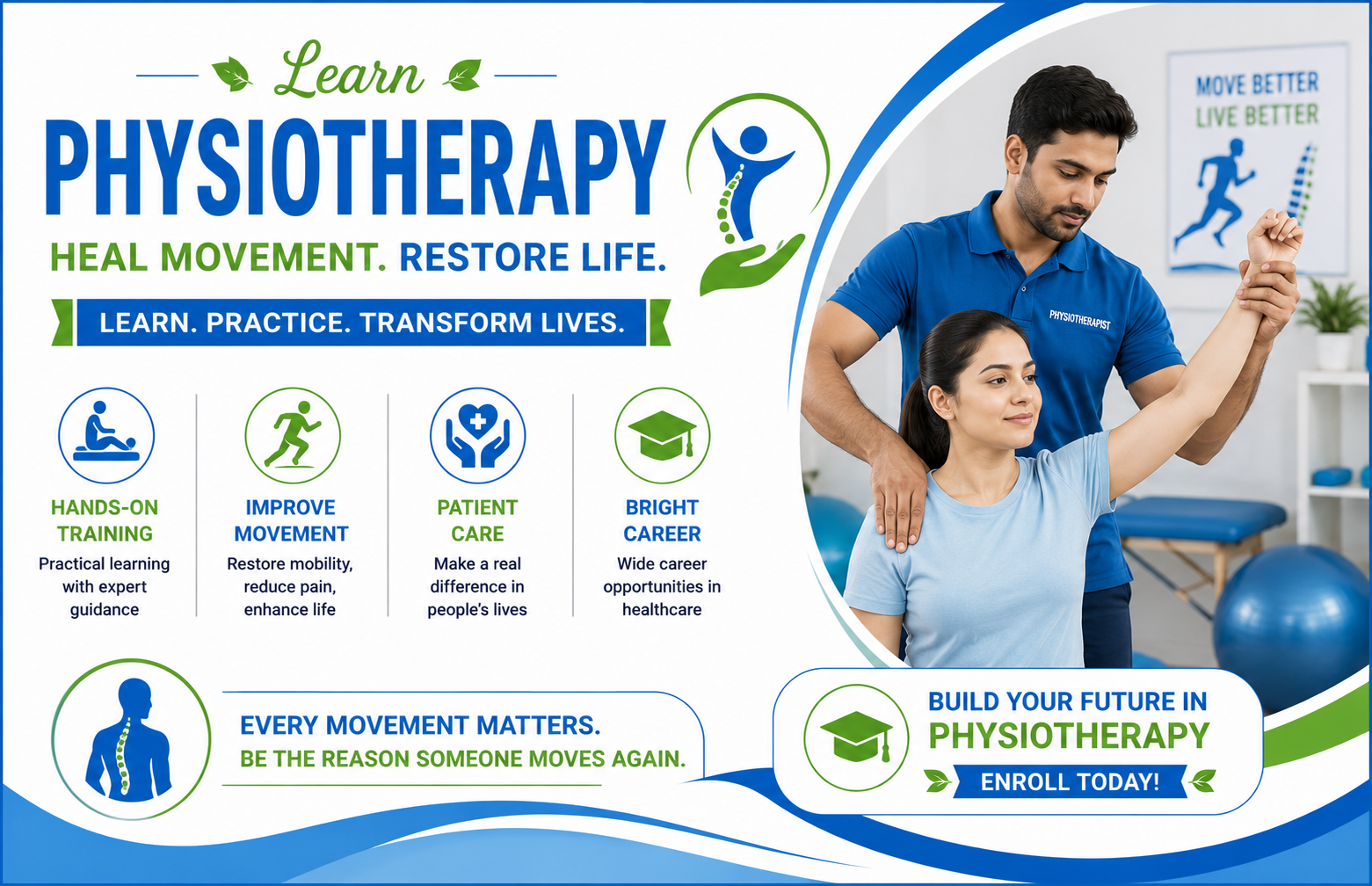
Physiotherapy (also called physical therapy) is a healthcare profession that helps people improve movement, reduce pain, restore function, and prevent injuries or disability through physical methods rather than surgery or medication.
Physiotherapists assess and treat problems affecting muscles, joints, bones, nerves, lungs, and the heart. Common treatments include:
Exercise therapy – strengthening, stretching, and mobility exercises.
Manual therapy – hands-on techniques to move joints and soft tissues.
Posture and movement training – improving how you sit, stand, walk, or perform activities.
Pain management – techniques to reduce pain and improve function.
Rehabilitation – helping recovery after injury, surgery, stroke, or illness.
Education and prevention – advice to avoid future injuries and maintain health.
Back and neck pain
Sports injuries
Arthritis and joint problems
Fractures and post-surgical recovery
Stroke rehabilitation
Balance and mobility issues
Respiratory conditions such as asthma or chronic lung disease
Neurological conditions such as Parkinson's Disease
If someone injures their knee while playing sports, a physiotherapist may:
Assess the injury.
Reduce pain and swelling.
Prescribe exercises to restore strength and flexibility.
Guide a safe return to sports and daily activities.
In short, physiotherapy focuses on helping people move better, feel better, and regain independence after injury, illness, or disability.
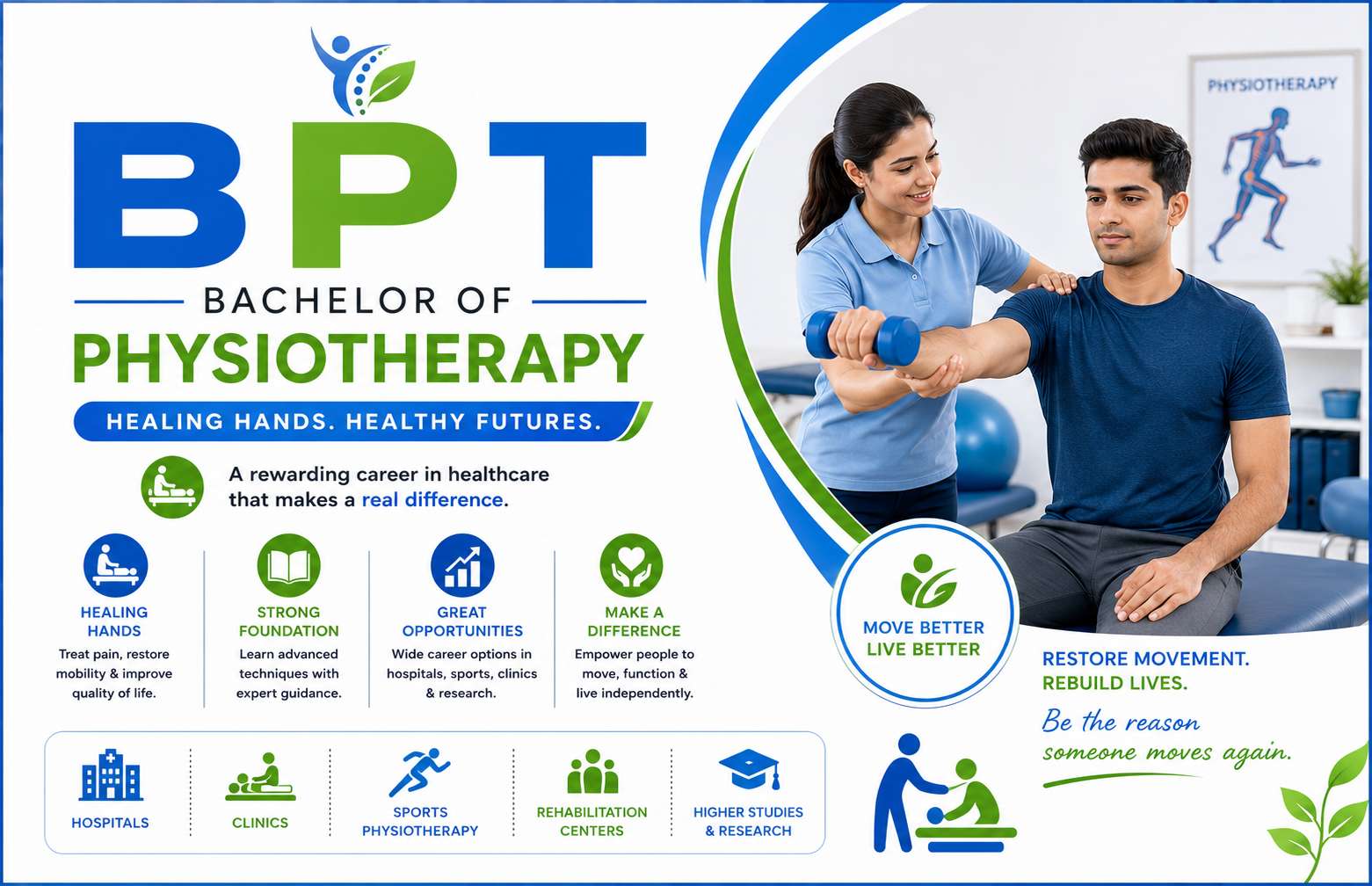
A Bachelor of Physiotherapy (BPT) is an undergraduate degree program that trains students to assess, diagnose, and treat physical movement problems, injuries, disabilities, and certain health conditions using non-surgical methods such as exercise, manual therapy, education, and rehabilitation techniques.
Physiotherapists help people:
Recover from injuries (sports injuries, fractures, ligament tears)
Rehabilitate after surgery
Manage chronic pain (back pain, neck pain, arthritis)
Improve mobility and strength
Recover from neurological conditions such as Stroke and Parkinson's disease
Treat respiratory conditions and improve breathing function
Support children and older adults with movement difficulties
In India, a BPT program is usually:
Duration: 4 years of academic study + 6 months internship (may vary by university)
Eligibility: Completion of 10+2 with Physics, Chemistry, and Biology (requirements vary by institution)
Subjects include:
Human Anatomy
Physiology
Biochemistry
Exercise Therapy
Electrotherapy
Orthopedics
Neurology
Cardiorespiratory Physiotherapy
Community Medicine
Rehabilitation
After BPT, graduates can work in:
Hospitals
Rehabilitation centers
Sports teams and fitness centers
Private clinics
Nursing homes
Research and academic institutions
Common roles include:
Physiotherapist
Sports Physiotherapist
Rehabilitation Specialist
Clinical Physiotherapist
Pediatric Physiotherapist
Geriatric Physiotherapist
After BPT, students often pursue:
Master of Physiotherapy (MPT)
Specializations in orthopedics, neurology, sports physiotherapy, cardiopulmonary physiotherapy, or pediatrics
Research and teaching careers
Starting salaries commonly range from ₹2.5 lakh to ₹6 lakh per year, depending on location, employer, skills, and experience. Physiotherapists with specialization, experience, or private practice can earn significantly more.
If you're considering BPT, I can also explain:
Admission requirements in India
Top BPT colleges in Tamil Nadu or India
Career prospects and salary growth
Whether BPT is a good option compared with MBBS, BSc Nursing, or Occupational Therapy.
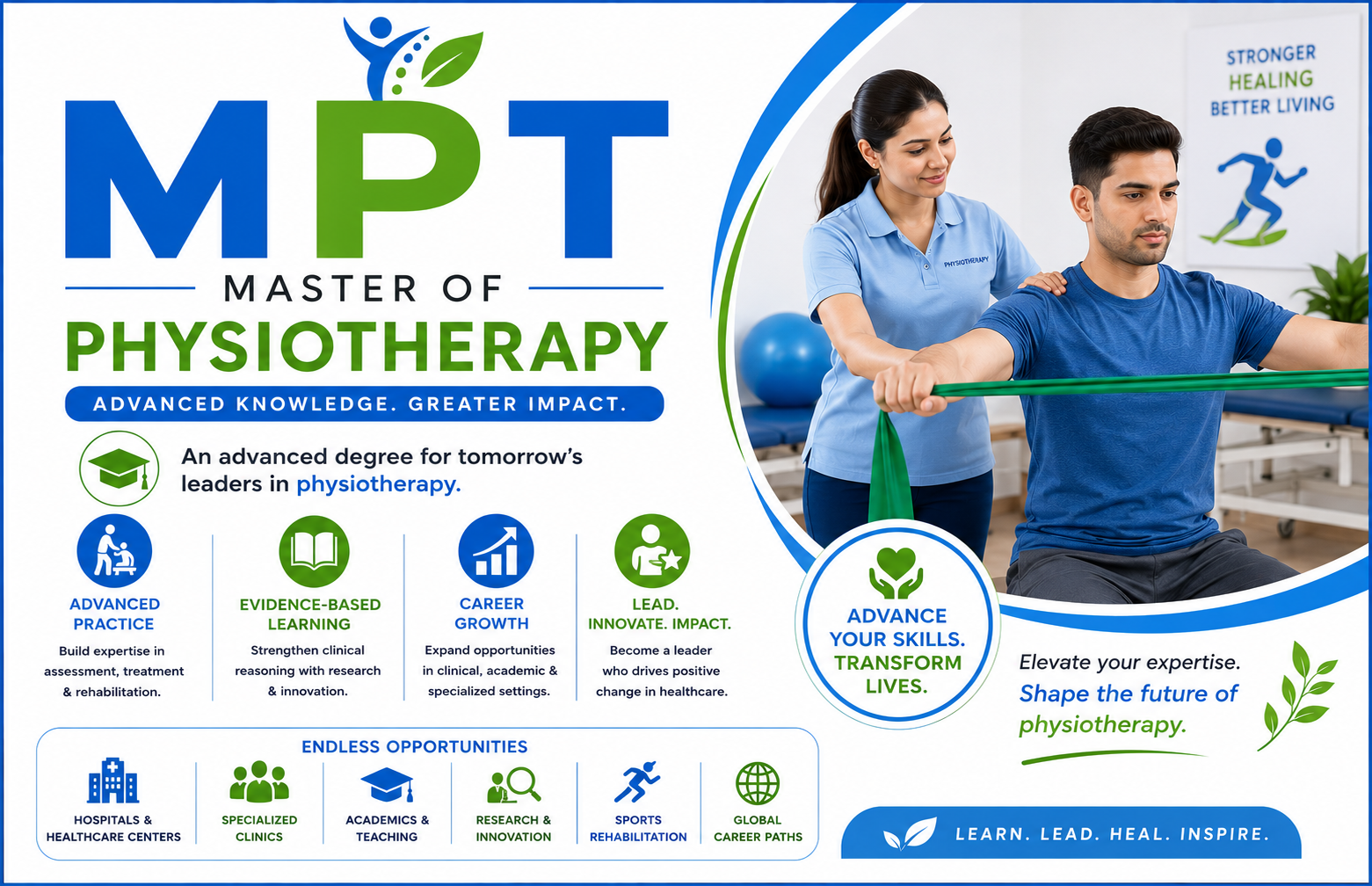
A Master of Physiotherapy (MPT) is a postgraduate degree in physiotherapy that provides advanced clinical knowledge, research skills, and specialized training beyond a bachelor's degree in physiotherapy.
Typically, you need:
A Bachelor of Physiotherapy (BPT) degree from a recognized institution.
Completion of any required internship period.
Admission may be based on entrance exams, merit, or interviews depending on the institution and country.
Usually 2 years in countries such as India, though the duration can vary by institution and country.
MPT programs often allow students to specialize in areas such as:
Orthopedic Physiotherapy
Neurological Physiotherapy
Cardiopulmonary Physiotherapy
Sports Physiotherapy
Pediatric Physiotherapy
Geriatric Physiotherapy
Women's Health / Obstetric and Gynecological Physiotherapy
Musculoskeletal Physiotherapy
Typical subjects include:
Advanced assessment and treatment techniques
Evidence-based practice
Research methodology and biostatistics
Rehabilitation sciences
Specialized clinical training
Dissertation or research project
After completing an MPT, graduates may work as:
Senior Physiotherapist
Specialist Physiotherapist
Sports Physiotherapist
Rehabilitation Consultant
Clinical Researcher
Lecturer or Academic Faculty
Healthcare Administrator
Graduates may pursue:
PhD in physiotherapy or related fields
Research careers
Academic and teaching positions
In India, an MPT can enhance career prospects in hospitals, rehabilitation centers, sports organizations, academic institutions, and private practice. If you'd like, I can also explain the difference between BPT and MPT, or provide information about MPT admissions and colleges in Tamil Nadu.
Skills like analytical-thinking, strategy, patience and understanding, research, and critical-thinking are enhanced through clinical training, laboratory work, projects, seminars, and presentations are enhanced through this course.




Your Future is Created by what you do Today not Tomorrow
UDYAM REGISTRATION NUMBER : UDYAM-TN-03-0125460
© Bright Life All Rights Reserved
