Since 2009
Since 2009


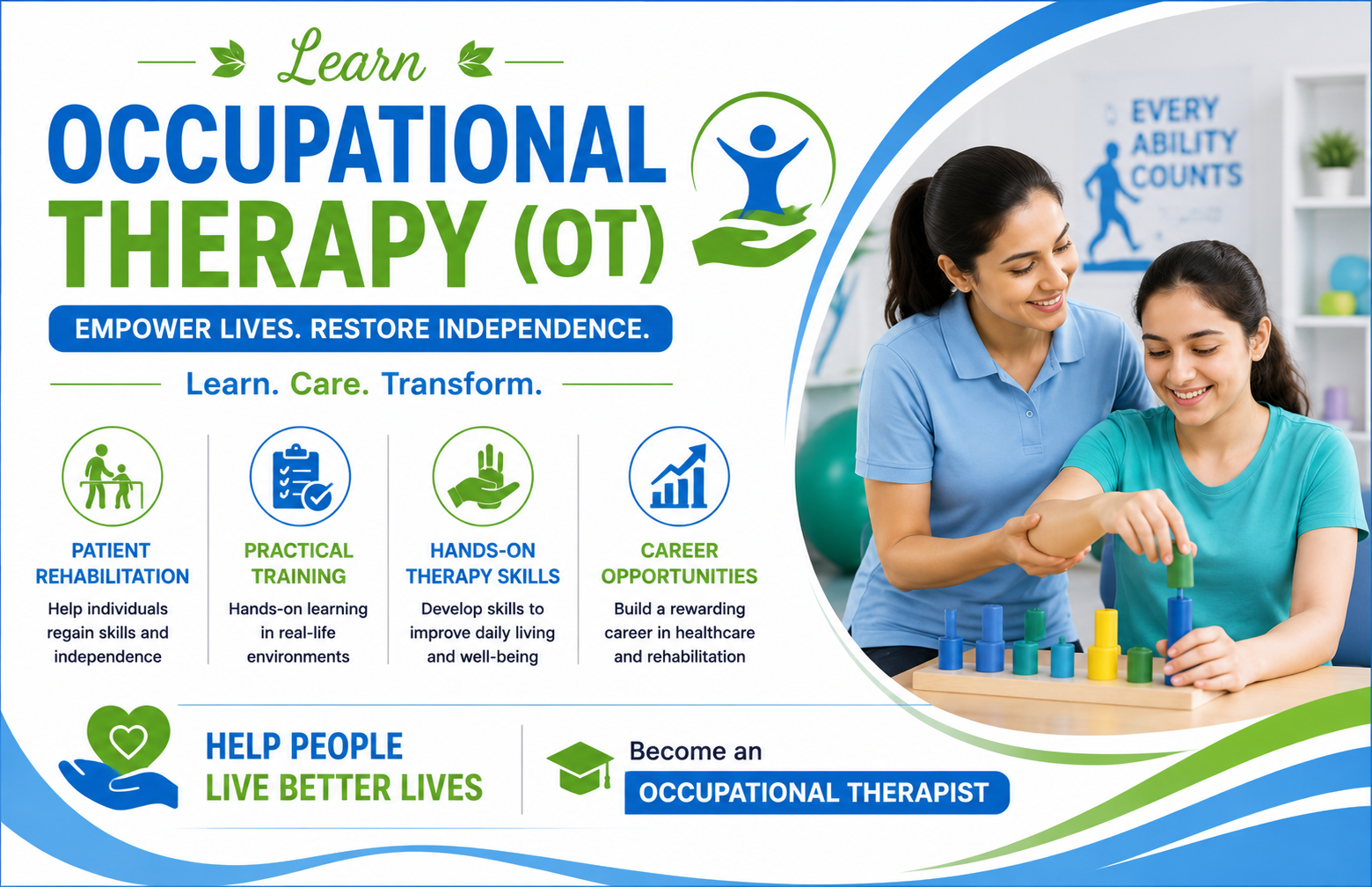
You might choose a career as an Occupational Therapist (OT) for several reasons:
Make a meaningful difference: Help people regain independence after injury, illness, or disability.
Work with diverse populations: Treat children, adults, and older adults with a wide range of needs.
Variety in the job: Work in hospitals, schools, rehabilitation centers, clinics, community settings, or private practice.
Problem-solving and creativity: Develop personalized strategies and adaptations to help people perform daily activities.
Growing demand: The need for rehabilitation and healthcare services continues to increase in many countries.
Rewarding career: Seeing clients achieve their goals and improve their quality of life can be highly satisfying.
Interdisciplinary teamwork: Collaborate with doctors, nurses, physical therapists, psychologists, and other healthcare professionals.
A concise interview answer could be:
"I chose Occupational Therapy because it allows me to help people become more independent and improve their quality of life. I enjoy working closely with individuals, understanding their unique challenges, and developing practical solutions that enable them to participate in everyday activities."
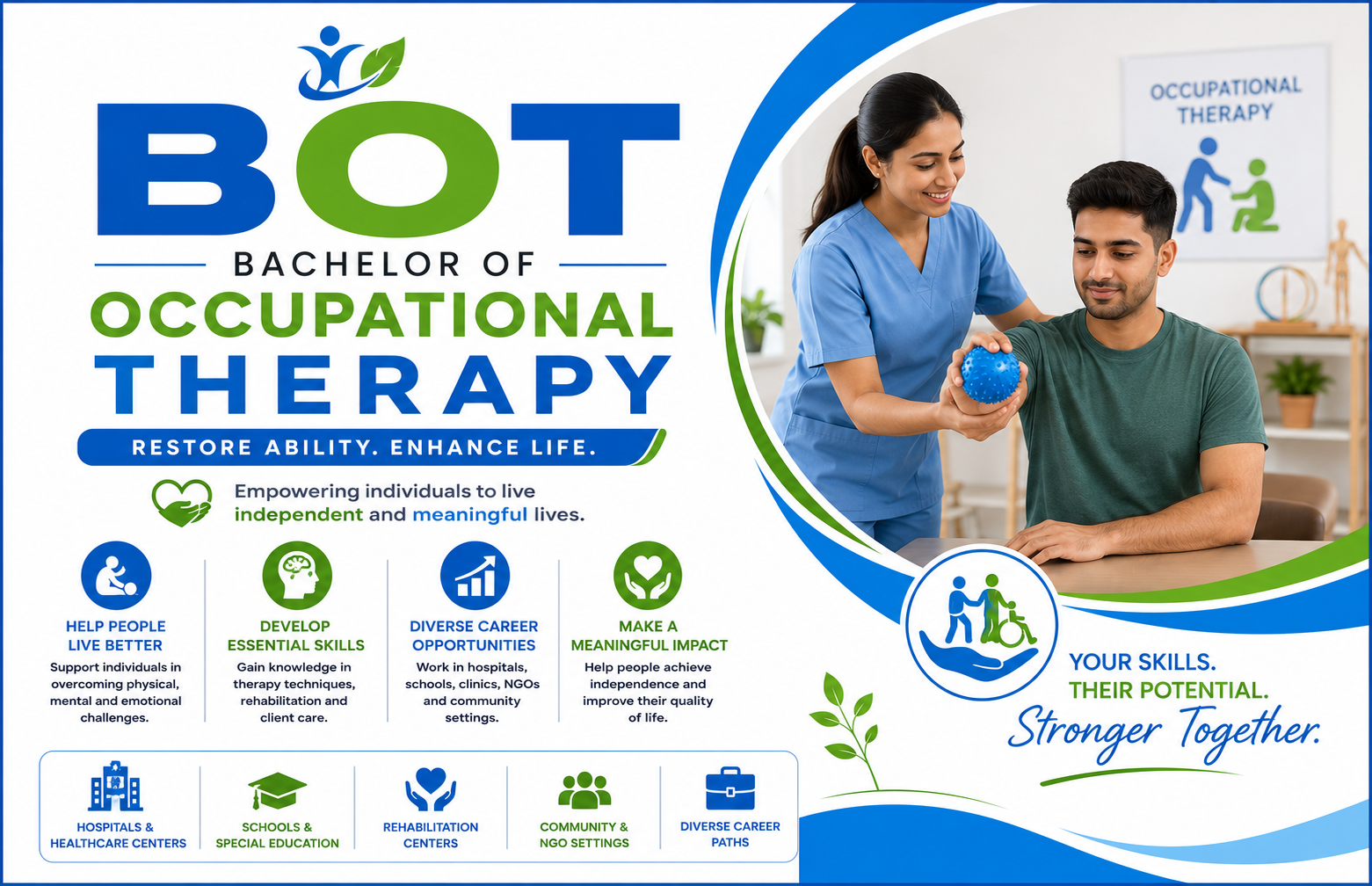
A Bachelor of Occupational Therapy (BOT) is an undergraduate degree that trains students to help people of all ages improve, regain, or maintain their ability to perform everyday activities (called "occupations") after illness, injury, disability, or developmental challenges.
Occupational therapists work with people who may have difficulties with tasks such as:
Dressing and grooming
Eating and cooking
Writing and studying
Working and earning a living
Social participation
Using assistive devices and adaptive equipment
Typical subjects include:
Human anatomy and physiology
Psychology
Neuroscience
Biomechanics
Pathology and medicine
Occupational therapy theory and practice
Rehabilitation techniques
Pediatrics
Mental health
Community-based rehabilitation
Students also complete clinical internships in hospitals, rehabilitation centers, schools, and community settings.
In India, a BOT degree is usually 4 to 4.5 years, often including a compulsory internship.
After completing BOT, graduates can work in:
Hospitals
Rehabilitation centers
Special schools
Mental health facilities
Geriatric care centers
NGOs
Private clinics
Home healthcare services
Common job titles include:
Occupational Therapist
Rehabilitation Therapist
Pediatric Occupational Therapist
Hand Therapist
Community Rehabilitation Specialist
While both professions are involved in rehabilitation:
|
|
|---|---|
|
|
|
|
|
|
Most colleges require:
Completion of 10+2 with Physics, Chemistry, and Biology (PCB)
Minimum percentage requirements set by the institution
Some universities may conduct entrance examinations
The degree qualifies graduates to practice occupational therapy according to applicable regulations and registration requirements in their region.
If you're considering BOT in India, I can also explain the admission process, top colleges, salary expectations, and career prospects specifically for 2026.
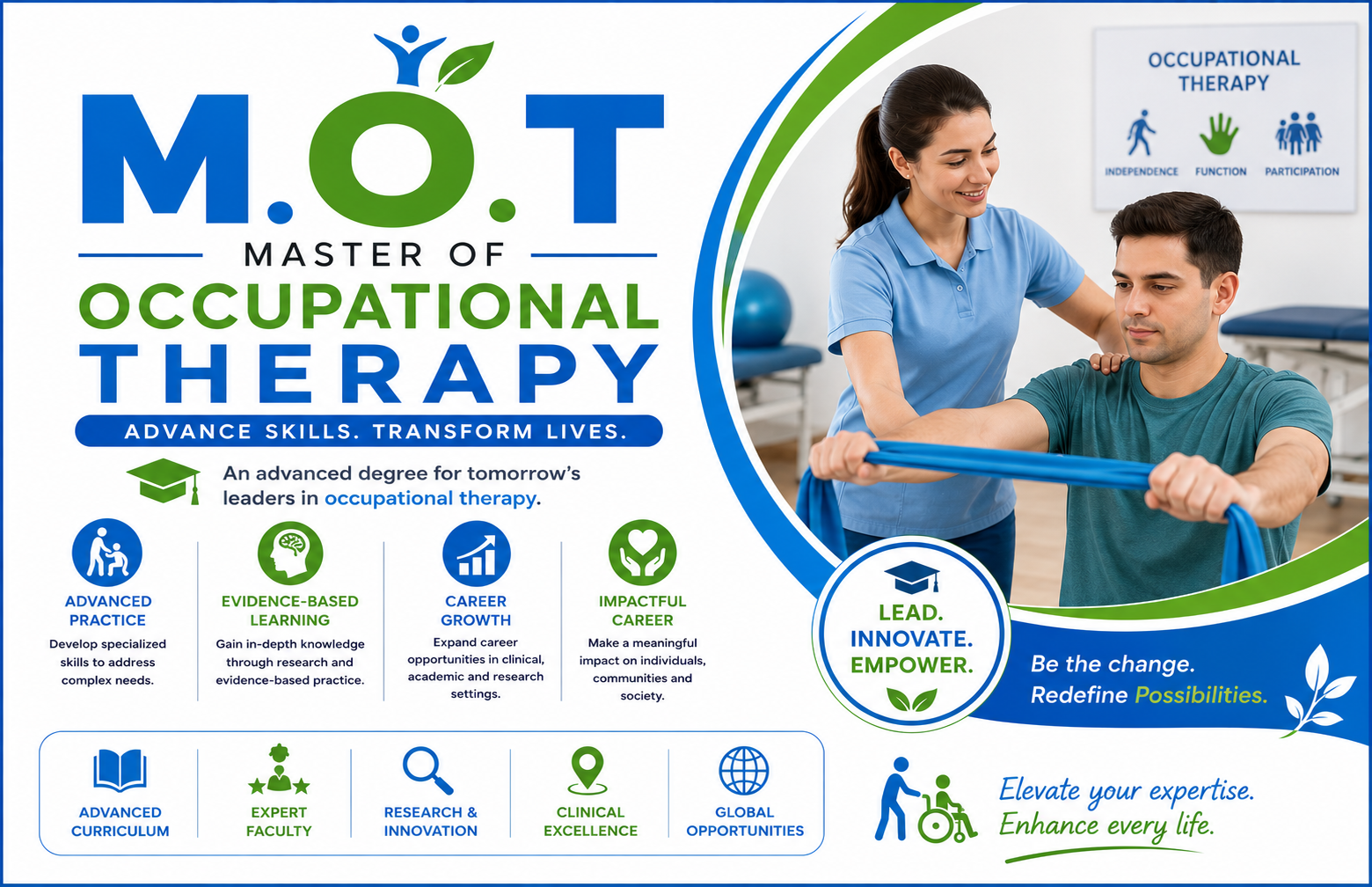
M.O.T (Master of Occupational Therapy) is a postgraduate professional degree in the field of Occupational Therapy, a healthcare discipline focused on helping people improve their ability to perform daily activities after illness, injury, disability, or developmental conditions.
An M.O.T prepares you to become a licensed occupational therapist, trained to assess and treat people who have difficulties with:
Physical movement (e.g., after stroke or injury)
Mental health conditions
Developmental delays in children
Age-related challenges in older adults
They help patients regain or develop skills needed for everyday life, such as:
Dressing, eating, bathing
Writing or using tools
Returning to work or school
Improving hand/arm function and coordination
Adapting environments (home, school, workplace)
Typical subjects include:
Human anatomy and physiology
Neurology and rehabilitation
Psychology and mental health
Pediatric and geriatric therapy
Assistive devices and adaptive techniques
Clinical practice / hospital training
Usually 2 years after a Bachelor of Occupational Therapy (B.O.T)
Includes clinical internships or hospital placements
Hospital occupational therapist
Rehabilitation specialist
Pediatric therapist
Mental health therapist
Lecturer/researcher in allied health sciences
Community rehabilitation worker








Your Future is Created by what you do Today not Tomorrow
UDYAM REGISTRATION NUMBER : UDYAM-TN-03-0125460
© Bright Life All Rights Reserved
